


New Residents
Six New Gopher Tortoises Call Chickasawhay Conservation Bank Home
Mar. 03, 2025
We are thrilled to welcome six new gopher tortoises to the Chickasawhay Conservation Bank! These new residents, all given carefully crafted nicknames by Westervelt Ecological Services (WES) staff such as Turt Reynolds or Voldeturt, join the other tortoises that live at the Chickasawhay Conservation Bank. Since 2009, this conservation site has become home to 26 relocated gopher tortoises as part of ongoing species recovery efforts that have been able to reconnect these relocated tortoises to the larger gopher tortoise population on the site.
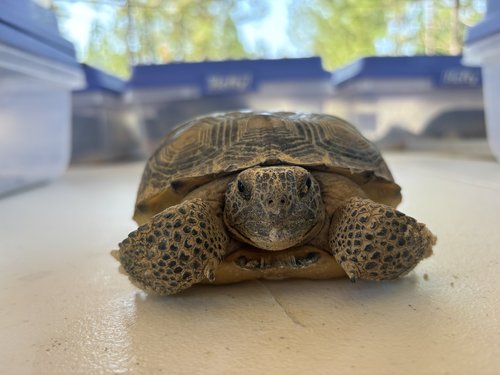
Gopher Tortoises
Gopher tortoises are native to the southeastern United States with their range including Alabama, Florida, Georgia, Mississippi, Louisiana, and South Carolina. Gopher tortoises are commonly associated with frequently burned, open, upland pine forests with sandy soil where they like to dig their burrows. Due to these burrows, gopher tortoises are vital to their ecosystem and are a keystone species as their burrows provide shelter to over 350 other species.
These pine forests habitat historically burned which maintained an open and diverse understory of grasses and forbs that tortoises needed to be able to effectively forage and traverse. However, reduction in prescribed burning, habitat loss and fragmentation have led to a steep decline in their numbers with the western segment of the gopher tortoise range being federally listed as “threatened” under the Endangered Species Act in 1987. Conservation initiatives, such as the relocation programs at Chickasawhay, play a critical role in mitigating these threats and promoting the long-term survival of this keystone species.
Welcoming our New Residents!
WES collaborated with the U.S. Fish and Wildlife Service to ensure the safe translocation of the tortoises. The process adhered to protocols designed to minimize stress and ensure the animals’ health and well-being. After the tortoises receive a wellness check and some new IDs, all 6 tortoises were released into a specially constructed 4-acre pen to acclimate them to their new burrows. After a “settling in period”, these pens will be deconstructed to allow the tortoises to explore and live in Chickasawhay’s managed longleaf pine habitat, which is ideal for their burrowing, nesting, and foraging needs.
With ongoing monitoring and habitat management, Chickasawhay Conservation Bank aims to support a thriving population of gopher tortoises while contributing to the broader recovery efforts across the Southeast.
Share this news:


