


Custom Mitigation Solutions in Sacramento County
Sep. 03, 2026
Approved mitigation credits can often provide a straightforward path to satisfying compensatory mitigation requirements. However, credits are not always available for every habitat type, species, geography, or project schedule. When traditional mitigation options are limited, Westervelt Ecological Services (WES) works with clients to develop customized mitigation strategies that provide a practical path forward while helping projects remain on schedule.
"We often work with clients whose mitigation needs cannot be fully addressed through available credits, whether because they are outside an approved service area, require a specific mitigation type, or need a solution that doesn't exist in the market today," said Amanda Dwyer, Sales & Business Development Manager. "In those situations, our team can evaluate alternatives and develop mitigation strategies tailored to the project's specific regulatory requirements."
From site identification and acquisition to conservation planning, permitting support, long-term management, and stewardship, WES provides turnkey mitigation solutions designed to help clients meet regulatory requirements while delivering meaningful conservation outcomes.
Over the past two decades, WES has conserved more than 3,000 acres across Sacramento County through 10 approved mitigation and conservation projects. Recently, WES expanded that portfolio through the completion of two new turnkey mitigation projects, the Crevis Creek Oak Woodland Preserve and the Golden Hills Preserve, demonstrating our ability to develop mitigation solutions for a variety of habitat types and permitting needs.
When Custom Mitigation Makes Sense
While approved mitigation credits are often the preferred solution, there are situations where a customized approach may be more appropriate, including:
- Required credits are not available.
- A project falls outside an approved service area.
- Available credits do not fully address project impacts.
- Large mitigation quantities are needed.
- Multiple mitigation requirements can be addressed through a single solution.
- Project schedules require a tailored strategy and early coordination.
In these situations, turnkey mitigation can help clients satisfy permitting requirements while maintaining project momentum.
Crevis Creek Oak Woodland Preserve
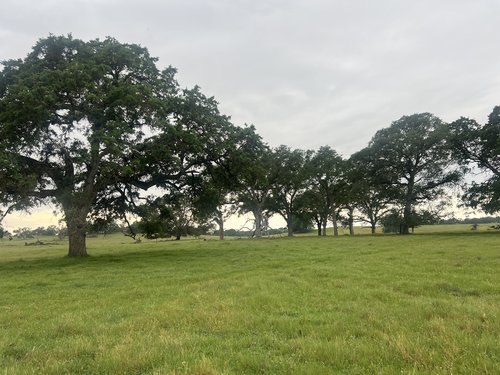
When a client approached WES with a significant oak woodland mitigation requirement, approved mitigation credits were not available in the quantity needed to support the project.
"As developers get their permitting requirements, they sometimes discover there are limited mitigation options available for their specific needs," said Dwyer. "In this case, there weren't approved oak woodland credits available in the market, so our team identified an alternative solution that would satisfy regulatory requirements and help keep the project moving forward."
To address the client's mitigation obligations, WES identified and evaluated potential mitigation properties, secured a suitable site, developed the mitigation strategy, and established permanent protection through a conservation easement. The resulting 124.85-acre preserve protects blue oak woodland habitat adjacent to Deer Creek Hills Nature Preserve, contributing to a larger network of conserved lands in Sacramento County.
By managing the process from property evaluation through conservation easement establishment, WES provided the client with a single-source mitigation solution that addressed permitting requirements while protecting ecologically valuable habitat.
Golden Hills Preserve
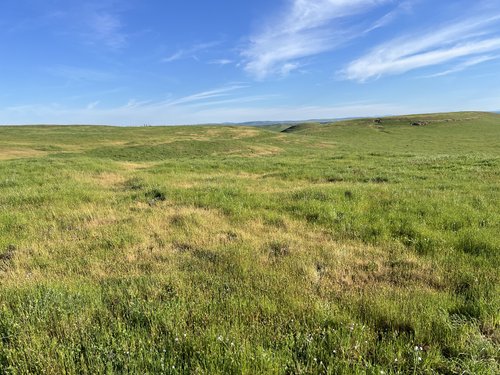
WES also developed the Golden Hills Preserve to address Swainson's hawk mitigation requirements in Sacramento County.
"Not every mitigation need can be effectively solved with available credits," said Dwyer. "For Golden Hills, the client needed a substantial amount of Swainson's hawk mitigation. Rather than piecing together mitigation from multiple locations, we were able to develop a more cost-effective comprehensive solution that addressed the client's needs through a single project."
The project protects approximately 118 acres within the larger Golden Hills property through a permanent conservation easement supported by long-term management, grazing, monitoring, and stewardship funding. The preserve was designed to maintain high-quality grassland habitat while providing the client with a comprehensive mitigation solution that addressed both permitting requirements and long-term conservation obligations.
The Golden Hills project also highlights the flexibility that custom mitigation can provide when project-specific requirements, timelines, or mitigation quantities make traditional mitigation options less practical.
Why Early Coordination Matters
The Crevis Creek and Golden Hills projects demonstrate how custom mitigation can help bridge the gap when approved mitigation credits are unavailable or do not fully address a project's specific requirements. Rather than relying on a one-size-fits-all approach, WES works with clients early to identify mitigation strategies that align with project impacts, permitting requirements, timelines, and geographic constraints.
"One of the biggest advantages of early coordination is the ability to evaluate a wider range of mitigation options before permitting becomes a critical path issue," said Dwyer. "Both of these projects demonstrate how proactive mitigation planning can remove potential permitting constraints before they impact construction schedules. The earlier mitigation planning begins, the more flexibility there is to develop a solution that meets both project and regulatory needs."
Custom mitigation requires more than identifying a property. It requires an understanding of agency expectations, biological resources, long-term management requirements, stewardship obligations, and project-specific permitting needs. By bringing these capabilities together under a single team, WES can move projects from concept to implementation while providing clients with a streamlined mitigation process.
Capacity for Future Projects
WES continues to maintain available mitigation capacity in Sacramento County. Opportunities currently exist at both Golden Hills and McDonald Ranch, where WES has additional land available to support future mitigation needs, including opportunities for species habitat preservation, vernal pool creation, seasonal wetland establishment, and other customized mitigation strategies.
Having both established mitigation banks and opportunities for custom turnkey solutions allows WES to help clients evaluate a range of mitigation options and identify the approach that best fits a project's schedule, geography, regulatory requirements, and conservation objectives.
Whether a project can satisfy permitting needs with available mitigation credits or requires a fully customized turnkey solution, WES can help identify and implement an approach that aligns with project objectives and regulatory requirements.
Have questions about mitigation and custom turnkey solutions?
Amanda Dwyer, Sales and Business Development Manager – [email protected]
Kate Furstoss, Business Development Executive – [email protected]
Share this news:


